Diagram of the experimental bomb
2026
Solo exhibition at Das Zimmer, curated by Alix Weidner
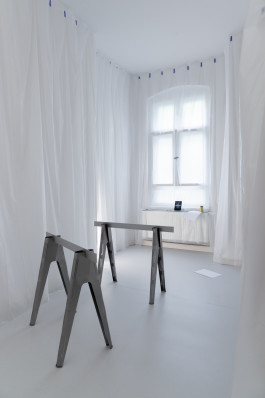
In Das Zimmer, Marina Stanimirović invites the viewer into a room under construction. If the space does not appear comfortably inhabited, its arrangement nevertheless suggests a minimum degree of comfort and functionality amid the surrounding disorder. The walls are covered with construction tarps that take on the appearance of curtains, while one can almost make out furniture of a fragile utility: a makeshift trestle table, an improvised shelf supporting objects whose forms hover somewhere between sculpture and readymade, evoking memories and events that are by turns joyful and traumatic.
In front of the entrance, on the translucent plastic curtain, hangs a large-format photographic diptych titled “Fun for Kids.” On the floor sits “Making do”, a sculpture consisting of four metal trestle-like elements, recalling both the language of the construction site, classical architecture, and that of designer furniture. In dialogue with the curtain-tarp, it further amplifies the room’s domestic atmosphere. Near the window, a long shelf has been precariously installed atop the radiator in a distinctly DIY fashion and holds several objects. Among these objects is a fragment of an artillery shell dating from the 1990s, which the artist’s paternal family (whom she used to visit in Bosnia during her childhood) had collected from a nearby field and repurposed as an ashtray. Next to it, an old photographic glass plate retrieved from the archives of the Meudon-based CRNS (French National Center for Scientific Research), near Paris, bearing what is described as a “diagram of an experimental bomb”. This diagram resonates particularly in “Das Zimmer” as it resembles a floor plan of a space that could be a church, a spaceship, a hidden room, or a mental space on the verge of exploding. Beside it lies almost ironically a silver piece of jewelry made from letter-shaped beads spelling out the phrase “DOING GREAT.”
Within this space, a sense of slippage, a glitch, takes hold. The translucent covering, suspended somewhere between curtain and protective painting tarp, lends the room the quality of a site perpetually unfinished, caught in a state of transformation, while simultaneously hinting at a concealed intimacy. The colorful photographic diptych, captured in a blurred smartphone photo, with a joyful title, depicts, in fact, a young child screaming as they slide down an inflatable slide and recalls those moments when childhood is anything but carefree. It encapsulates moments marked by vertigo, vulnerability, and solitude.
Elsewhere in the room, poems written by Marina Stanimirović and printed on sheets of paper are hanging on the shelf or lying on the floor. They evoke the aftermath of a shock and the various ways one might reflect on it in order to cope. Her poems offer a way to address and overcome trauma by placing art at the very heart of a survival strategy.
In Stanimirović’s installation, this necessity of creation becomes a necessity of construction. Post-traumatic life emerges as a permanent building site: a space one attempts to move forward through, while also fashioning temporary forms of comfort until something more stable can be built. Through found, fabricated, and repurposed objects, the artist develops precarious modes of repair, shaped by struggle and becoming. Survival strategies and other coping mechanisms (humor, satire, and at times cynicism) trigger laughter, a grimace, or simply a moment to breathe.
Text by Alix Weidner
Photography documentation by Wataru Murakami
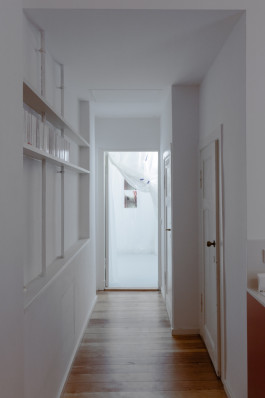
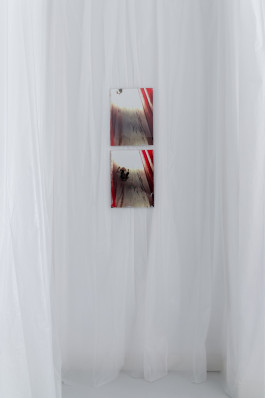
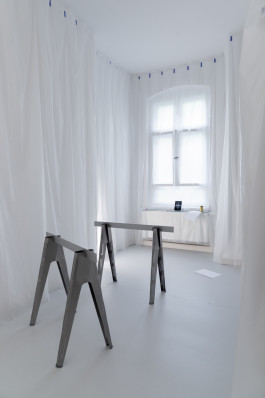
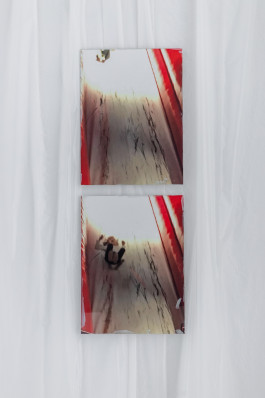
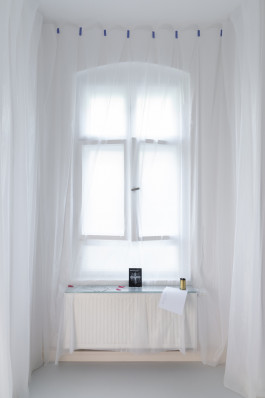
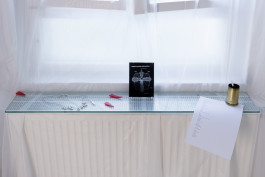
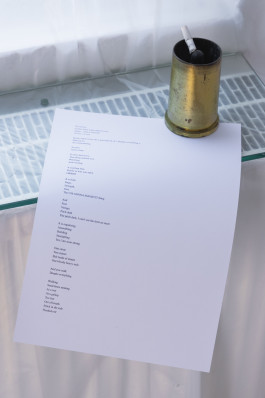
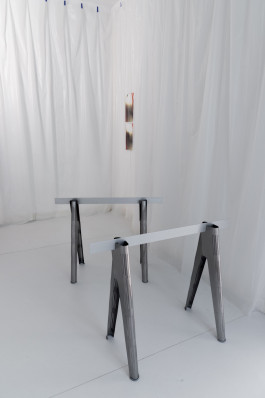
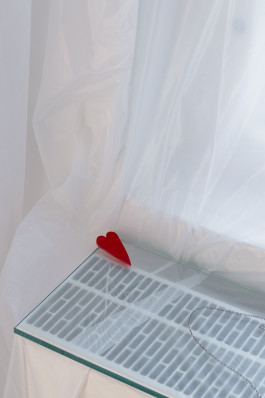
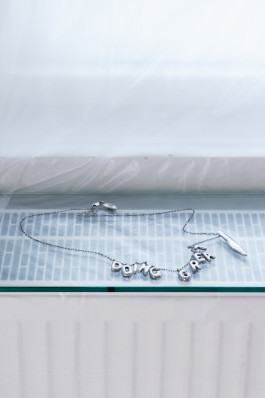
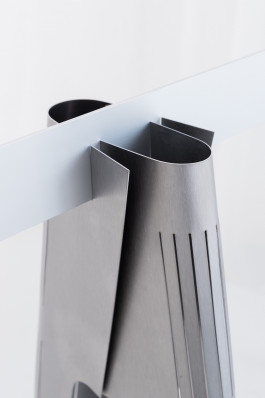
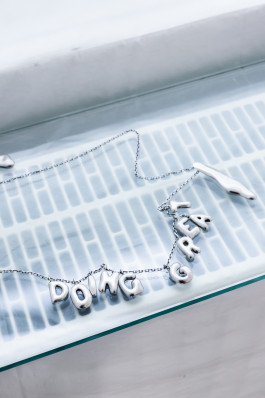
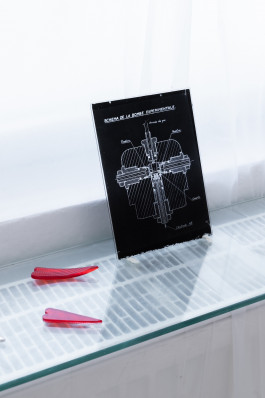
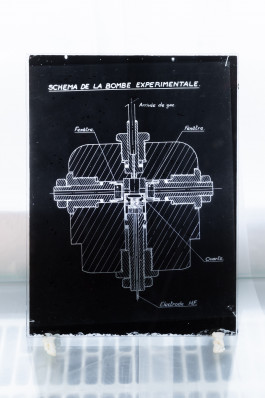
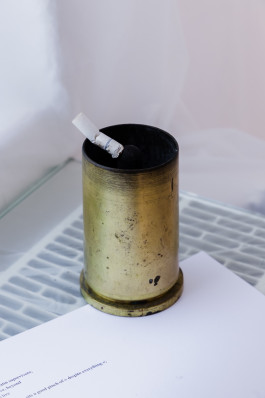
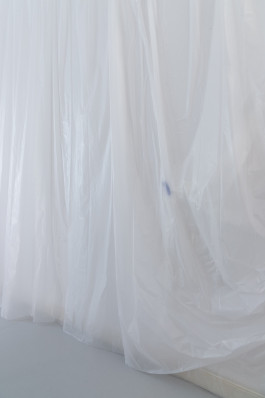
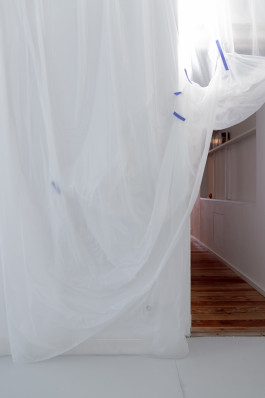
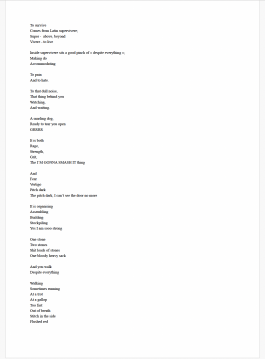
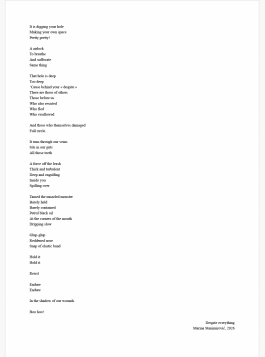
Diagram of the experimental bomb
2026
Solo exhibition at Das Zimmer, curated by Alix Weidner
In Das Zimmer, Marina Stanimirović invites the viewer into a room under construction. If the space does not appear comfortably inhabited, its arrangement nevertheless suggests a minimum degree of comfort and functionality amid the surrounding disorder. The walls are covered with construction tarps that take on the appearance of curtains, while one can almost make out furniture of a fragile utility: a makeshift trestle table, an improvised shelf supporting objects whose forms hover somewhere between sculpture and readymade, evoking memories and events that are by turns joyful and traumatic.
In front of the entrance, on the translucent plastic curtain, hangs a large-format photographic diptych titled “Fun for Kids.” On the floor sits “Making do”, a sculpture consisting of four metal trestle-like elements, recalling both the language of the construction site, classical architecture, and that of designer furniture. In dialogue with the curtain-tarp, it further amplifies the room’s domestic atmosphere. Near the window, a long shelf has been precariously installed atop the radiator in a distinctly DIY fashion and holds several objects. Among these objects is a fragment of an artillery shell dating from the 1990s, which the artist’s paternal family (whom she used to visit in Bosnia during her childhood) had collected from a nearby field and repurposed as an ashtray. Next to it, an old photographic glass plate retrieved from the archives of the Meudon-based CRNS (French National Center for Scientific Research), near Paris, bearing what is described as a “diagram of an experimental bomb”. This diagram resonates particularly in “Das Zimmer” as it resembles a floor plan of a space that could be a church, a spaceship, a hidden room, or a mental space on the verge of exploding. Beside it lies almost ironically a silver piece of jewelry made from letter-shaped beads spelling out the phrase “DOING GREAT.”
Within this space, a sense of slippage, a glitch, takes hold. The translucent covering, suspended somewhere between curtain and protective painting tarp, lends the room the quality of a site perpetually unfinished, caught in a state of transformation, while simultaneously hinting at a concealed intimacy. The colorful photographic diptych, captured in a blurred smartphone photo, with a joyful title, depicts, in fact, a young child screaming as they slide down an inflatable slide and recalls those moments when childhood is anything but carefree. It encapsulates moments marked by vertigo, vulnerability, and solitude.
Elsewhere in the room, poems written by Marina Stanimirović and printed on sheets of paper are hanging on the shelf or lying on the floor. They evoke the aftermath of a shock and the various ways one might reflect on it in order to cope. Her poems offer a way to address and overcome trauma by placing art at the very heart of a survival strategy.
In Stanimirović’s installation, this necessity of creation becomes a necessity of construction. Post-traumatic life emerges as a permanent building site: a space one attempts to move forward through, while also fashioning temporary forms of comfort until something more stable can be built. Through found, fabricated, and repurposed objects, the artist develops precarious modes of repair, shaped by struggle and becoming. Survival strategies and other coping mechanisms (humor, satire, and at times cynicism) trigger laughter, a grimace, or simply a moment to breathe.
Text by Alix Weidner
Photography documentation by Wataru Murakami