Šta tata radi
What dad does
2024
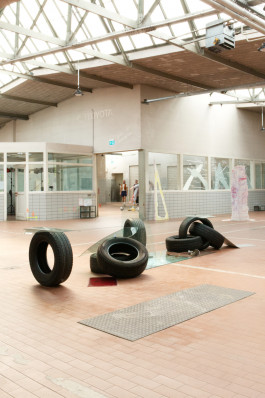
Found car wheels, car windows and glass sheets, analog photographs, silicone rubber, stainless steel, industrial sewing machine pulley.
72 x 250 x 600 cm
In this installation, I use the figure of the father to explore masculinity from the intimate perspective of a daughter. Following the loss of my mother, I found myself looking at my father differently: at a man I love deeply, but whom I have never fully understood. Unlike my relationship with my mother, our relationship has been marked by silence, distance and a lack of verbal exchange. I began to look at him through the fragments available to me: photographs I took of him, images of his workplace and home, and screenshots of our WhatsApp conversations.
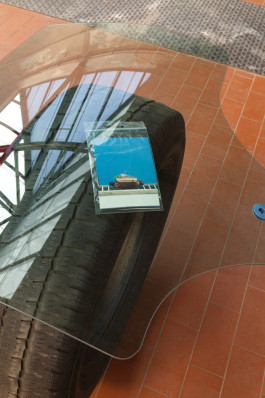
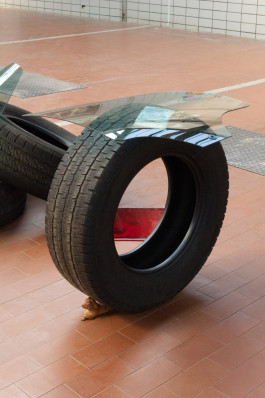
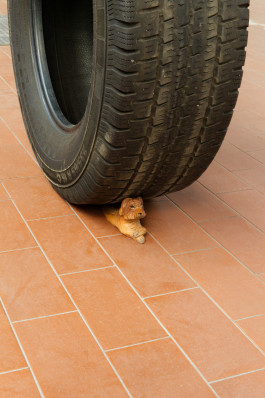
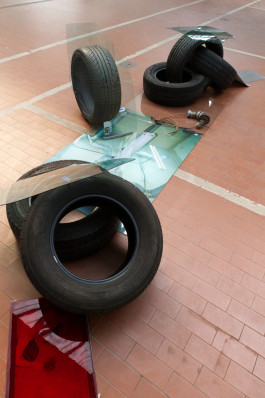
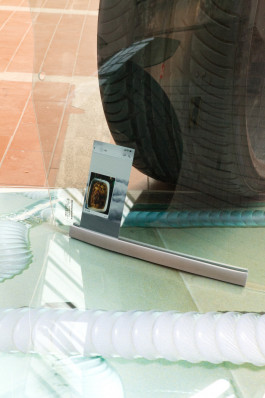
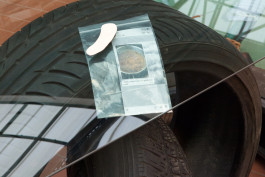
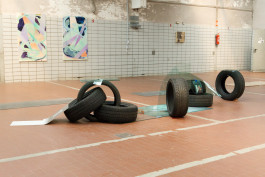
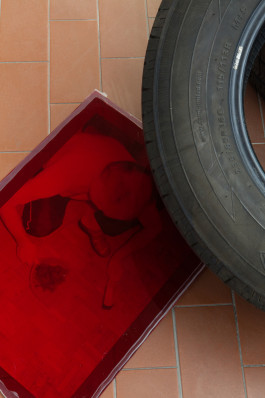
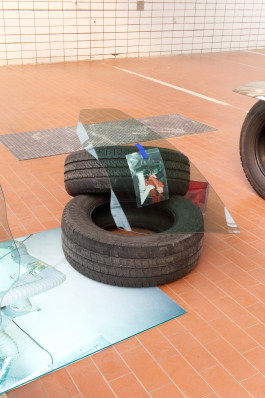
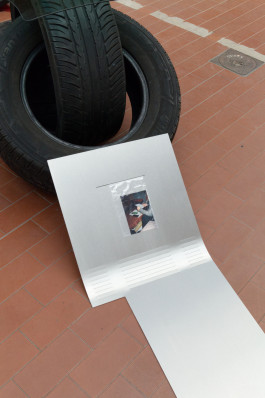
In Šta tata radi, seven car tyres are scattered across the installation, alongside sheets of glass and photographs. The tyres refer to my dad’s car, an important object in his everyday life, while also functioning as found sculptural material. Analogue photographs and digital screenshots are placed underneath and between these elements, becoming part of the physical construction of the work.
My dad at work, my dad at home, my dad’s stuff, my dad’s messages. These fragments of our relationship are brought together through an arrangement shaped by intimacy, affection, frustration and observation. From the attempt to understand one particular man, the work opens onto broader questions of masculinity, social class and inherited ideas of male authority: how are these roles performed, reproduced and passed on, and how do seemingly ordinary forms of masculinity connect to larger structures of power?
Šta tata radi
What dad does
2024
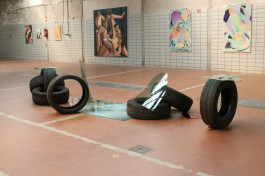
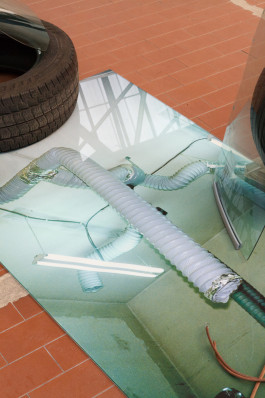
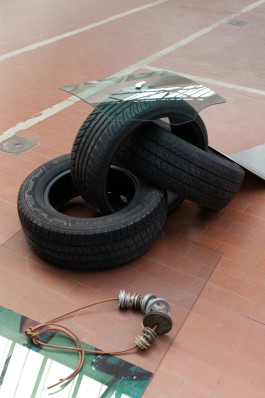
Found car wheels, car windows and glass sheets, analog photographs, silicone rubber, stainless steel, industrial sewing machine pulley.
72 x 250 x 600 cm
In this installation, I use the figure of the father to explore masculinity from the intimate perspective of a daughter. Following the loss of my mother, I found myself looking at my father differently: at a man I love deeply, but whom I have never fully understood. Unlike my relationship with my mother, our relationship has been marked by silence, distance and a lack of verbal exchange. I began to look at him through the fragments available to me: photographs I took of him, images of his workplace and home, and screenshots of our WhatsApp conversations.
In Šta tata radi, seven car tyres are scattered across the installation, alongside sheets of glass and photographs. The tyres refer to my dad’s car, an important object in his everyday life, while also functioning as found sculptural material. Analogue photographs and digital screenshots are placed underneath and between these elements, becoming part of the physical construction of the work.
My dad at work, my dad at home, my dad’s stuff, my dad’s messages. These fragments of our relationship are brought together through an arrangement shaped by intimacy, affection, frustration and observation. From the attempt to understand one particular man, the work opens onto broader questions of masculinity, social class and inherited ideas of male authority: how are these roles performed, reproduced and passed on, and how do seemingly ordinary forms of masculinity connect to larger structures of power?